
April 2026:
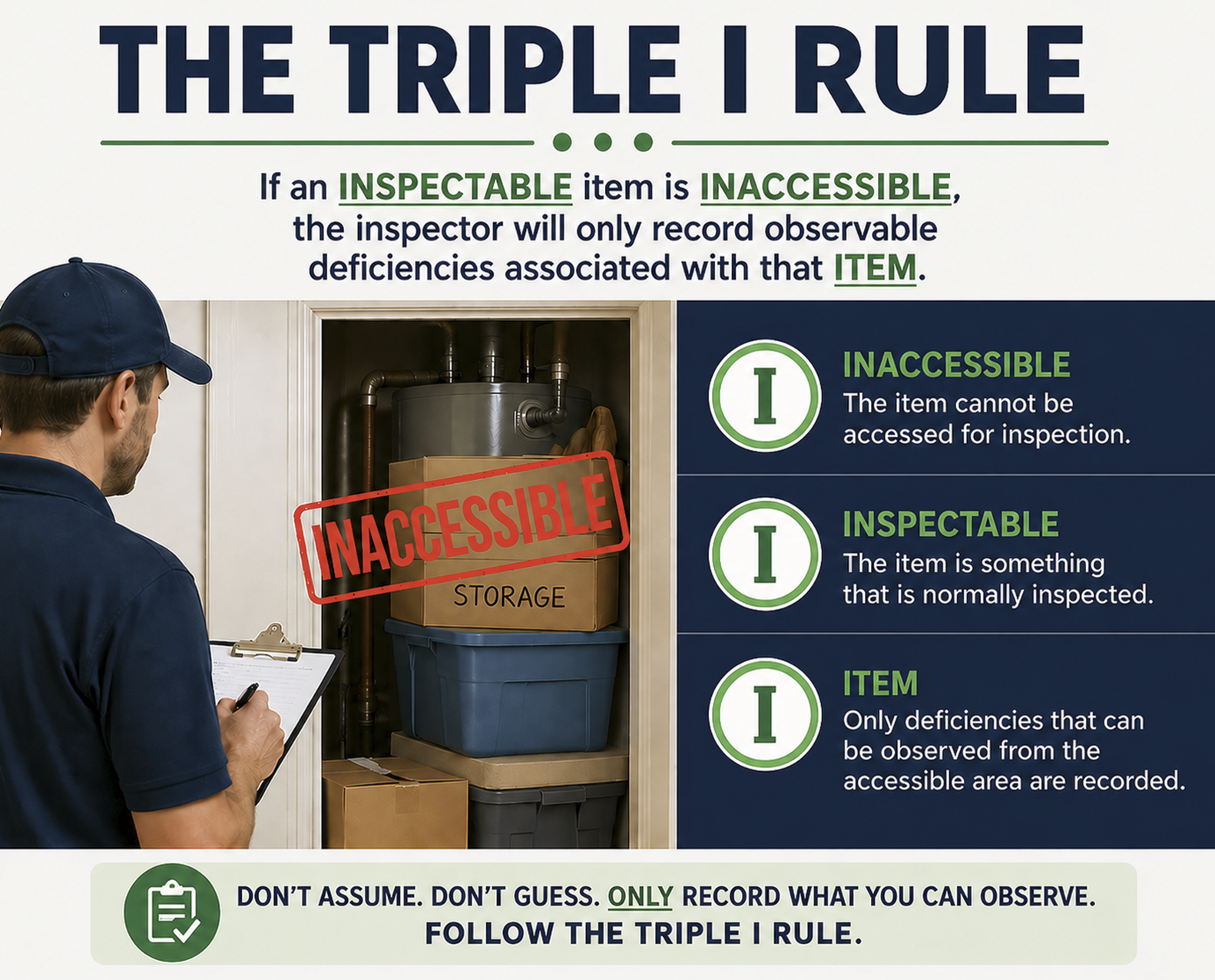
The Triple I Rule:
Inaccessible Inspectable Items

Click here to check out free, downloadable REAC Resources including the new NSPIRE Self-Inspection Checklist!
New Training Dates TBD due to NSPIRE Standard Updates this Summer!
In this April Newsletter, I need to explain what I like to call “The Triple I Rule”: Inaccessible Inspectable Items.
Under the UPCS protocol, if inspectors could not physically test an inspectable item – we made up a deficiency for it!
UPCS:

It’s the complete opposite for the NSPIRE protocol!
NSPIRE – The Triple I Rule:

While I agree that the NSPIRE Inspector Protocol has some conflicting information in it, I believe HUD’s intent on this rule is clear. I am going to explain this in its entirety so that it will assist you in appealing.
No Access to a Common Area (e.g. janitor closet, electric room, etc.):
Things happen. You lost the key or the key broke off in the lock…or maybe you never had a key!
The Protocol states:

You CANNOT:

But if you cannot provide access to the Common Area for inspection, the inspector has clear instructions:

What does this mean to you?
HUD may follow up with you via phone or in person to see what you’re hiding Seriously, 99% of the time they will let it go – unless it becomes a persistent problem, of course.
Elevator Machinery Rooms have specific, crystal-clear rules:

Never Inspected:

SNOW:

UNITS – PHA/MF Requirements:
Focus on the Highlighted Areas:
 \
\

UNITS – Inspector Requirements:
I have been hearing that some inspectors do not physically test inspectable items but rather force the person escorting them to do it. THIS IS AGAINST PROTOCOL!


Bottom Line:
While the property escort is required to provide access to all inspectable items, sometimes it’s just not possible.
Example 1: The only bedroom window is blocked by resident property:

The inspector is unable to test the operation of the window or, in many cases, cannot even reach the window to inspect the components (operation, screen, frame, etc).
The NSPIRE Protocol is clear (The Triple I Rule):
THIS MEANS THE INSPECTOR OBSERVES WHAT THEY CAN AND MOVES ON!!!
Side Note: Due to politics, this is NOT an obstructed rescue opening. It is, however, a fire code violation and you’re still liable. NSPIRE Egress Standard:

Example 2: The water heater is located under the kitchen countertop and isn’t accessible.

In 2013, I brought up this issue, and it was addressed in HUD’s QA Question of the Month:

Under UPCS, it was crystal clear:

Under NSPIRE, it’s less clear HOWEVER the Triple I Rule is absolutely applicable!

So what if you say you won’t provide access? The Triple I Rule applies:
Some inspectors are used to the old rule under UPCS and are citing (sometimes multiple) non-existant deficiencies because they do not agree with the rules or are being told to do so by the HUD Vendors.
You can appeal these “deficiencies” by including the snip from HUD’s Triple I Rule from the Inspector Protocol!
I hope this cleared up the confusion!
Please reach out to me for consulting, Pre-NSPIRE inspections, training, appeals, or if you just have a question!
Resources
HUD has PDFs (videos are currently down) on how to appeal and how to close out H&S deficiencies here:
NSPIRE Toolkit
**Remember, if you will be appealing something that was cited,
your “defect mitigation in 24 hours” is that you are appealing…not that you fixed it!**
To subscribe to this free monthly newsletter and read newsletters you may have missed, click here: C4N6 Newsletter Registration and Archive